


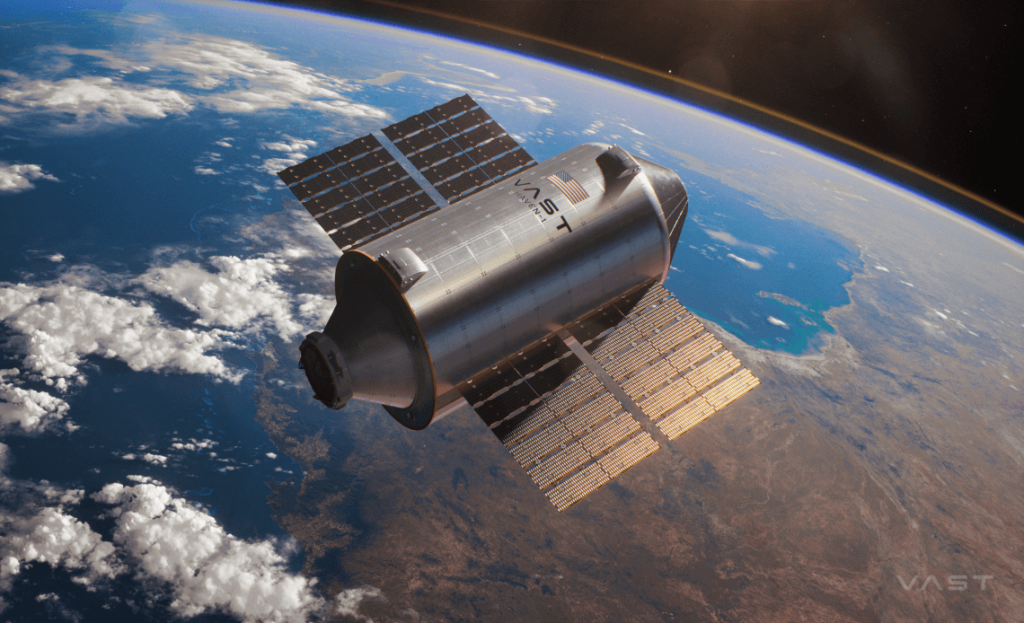
Vast Space has presented the design of its space station, which is set to be proposed to NASA in the forthcoming stage of the programme aimed at developing commercial alternatives to the International Space Station.
NASA is planning to decommission the ISS by 2031 and will help facilitate the development of private space stations in Earth’s orbit for use by a combination of private and public customers.

Throughout its operational life, the ISS has had its lifespan extended on several occasions.
COMMERCIAL LEO DESTINATION PROGRAMME
NASA is currently overseeing the Commercial LEO Destination (CLD) programme, which will select the firm tasked with building the ISS successor, with the Phase 2 winner expected to be named in mid-2026.
If successful, Vast intends to have the first module of its Haven-2 space station fully operational in orbit by 2028.
The company said it would be able to launch the module into orbit quickly due to the considerable private investments already made in the design, build, launch, and operation of Haven-1.
PRIVATE COMPANIES COMPETE FOR ORBITAL LABORATORY
The retirement of the International Space Station (ISS) is set for 2030. With just six years to go, private companies are competing to place their space stations in low-Earth orbit and create the first-ever commercial orbital laboratory.
VAST’S PRESENTATION AT IAC
At the 75th International Astronautical Congress (IAC) in Milan, Italy, on Monday (14 October), U.S.-based space habitation technology company Vast put itself forward. The company’s CEO, Max Haot, introduced Haven-2 as a proposed successor to the ISS.
In an accompanying press statement, Vast describes the private space station Haven-2 as the “next step in the company’s vision to pioneer a path to long-term living and thriving in space.”
“Our focus this decade is to win the NASA Commercial LEO Destination (CLD) contract and build the successor to the International Space Station,” said Max Haot, Vast CEO. “To achieve this, we will first demonstrate our capability by building and operating the world’s first commercial space station, Haven-1, which is set to launch in 2025.”
STRATEGIC OVERLAP WITH THE ISS

He noted that by launching the first module in 2028, there would be an overlap with the ISS, thus safeguarding against circumstances such as an early Russian withdrawal from the ISS partnership, which could obstruct the ISS from operating until 2030 as projected by NASA.
Following this, Vast plans to launch three more modules at roughly six-month intervals in 2029 and 2030.
The modules will be docked in a line. Although they will be effectively the same, they will be outfitted with a variety of laboratory facilities.
Vast will also take this opportunity to upgrade the station’s initial open-loop life support system to a closed-loop system by the time the fourth module is installed.
There is furthermore information available from this link.